
Developer Side Hustle Tracker That Tells the Truth
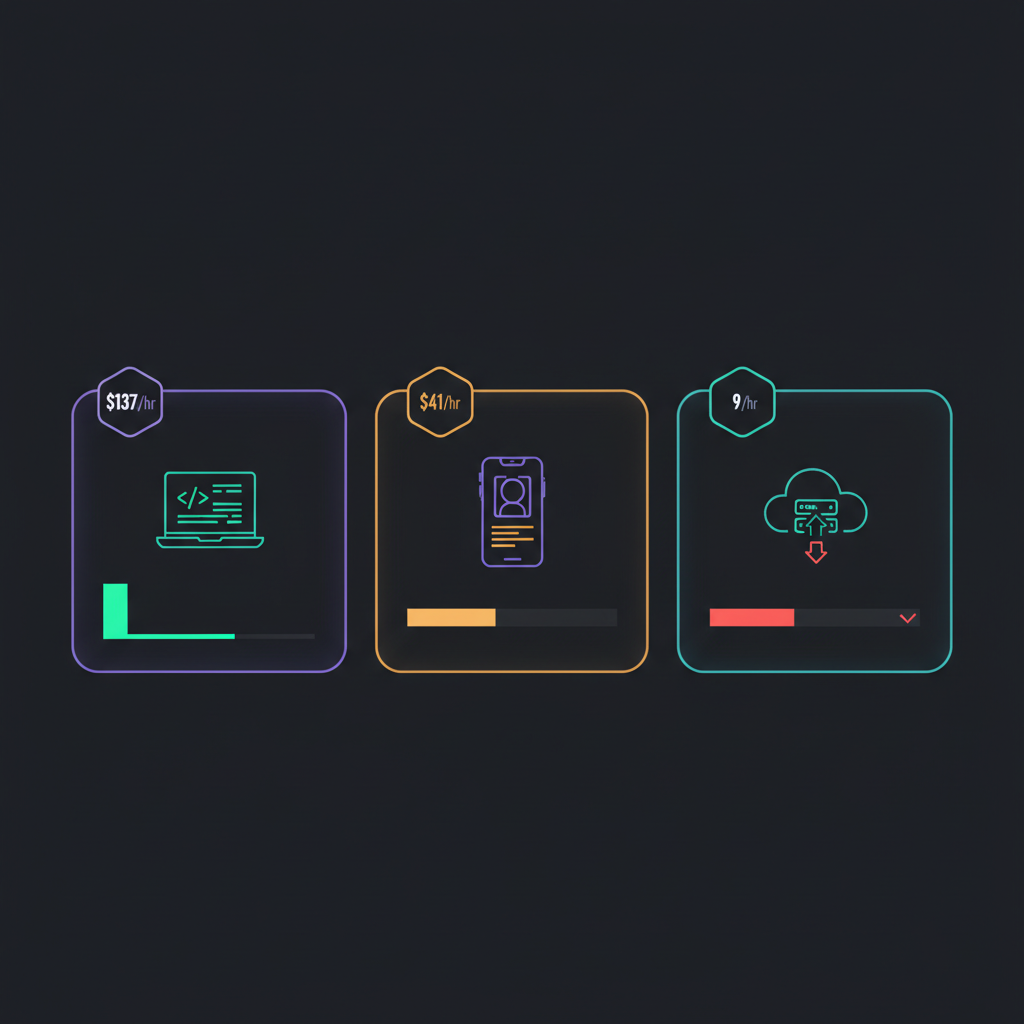
You shipped a small SaaS, took on two client retainers, and still have that mobile app bringing in a little monthly revenue. On paper, it looks like momentum. In practice, most developers need a developer side hustle tracker for one reason: gross revenue is lying to them.
If one project makes $2,000 a month but eats 30 hours, support time, hosting, and transaction fees, it may be worse than the boring client who pays less and never sends a midnight message. That is the real job of tracking — not making your work look bigger, but finding out what is actually worth keeping.
What a developer side hustle tracker should measure
A useful tracker does not stop at income. Revenue is the easiest number to collect and the easiest one to misread. If you are running multiple income streams, the question is not what came in — the question is what stayed yours after the project took its cut.
That means each side hustle needs its own income and expense view. Your iOS app should not be blended with your contract work. Your plugin sales should not disappear into the same bucket as consulting invoices. Once everything is mixed together, you lose the only insight that matters: which stream is carrying the business and which one is quietly draining it.
A strong developer side hustle tracker also needs to handle shared costs. This is where homemade spreadsheets usually start breaking. If one VPS supports three products, assigning the whole bill to one project makes that project look weaker than it is. If you ignore the cost entirely, all three look better than reality. Shared software subscriptions, design tools, domain renewals, and contractor help work the same way. Costs need to be split fairly across the projects that use them.
Time is the other number developers avoid because it tends to ruin a good story. A side project that nets $600 a month sounds respectable until you realize you spend 18 hours maintaining it. That is when profit per hour becomes the metric that clears the fog. It does not tell you what to love — it tells you what is paying you.
A side project netting $600/mo sounds respectable until you realize you spend 18 hours maintaining it. That is when profit per hour becomes the metric that clears the fog.
Why most tracking methods fail after the second project
The first side hustle is manageable in a spreadsheet. The second is annoying but still possible. By the third, most people are no longer tracking — they are reconstructing. They scroll through payment notifications, search old invoices, guess at software costs, and mentally round everything in their favor.
The problem is not discipline. It is structure.
Developers often build a tracking system around transactions instead of projects. That sounds reasonable until one expense supports several streams, one client invoice covers multiple deliverables, or one tool gets used across everything. Then the math gets fuzzy fast.
The other common failure is treating time as optional. It is not optional if your goal is deciding what deserves another month of effort. A project can be modestly profitable in absolute dollars and still be a bad use of your time. Another can look small but produce a strong hourly return because it runs quietly in the background.
This is where a lot of side hustles survive longer than they should — not because they are working, but because nobody has forced them to compete on the same scoreboard.
The numbers that actually help you decide
If your tracker is going to be useful, it should help you make decisions, not just archive activity.
- Net profit by project. Revenue minus direct costs and a fair share of shared costs. Without it, every project gets judged by vibes.
- Profit per hour. A small B2B micro-SaaS that clears $400 on four hours of work is healthier than a course funnel making $1,200 on 25 hours of monthly maintenance. The top-line number is worse. The business is better.
- Recurring vs irregular revenue. A one-off consulting project can boost a month, but it should not trick you into thinking the income stream is stable.
- Unpaid overhead. Proposal writing, support, admin, revision loops, and invoice chasing. Developers count build time and ignore everything around it. If your tracker misses the overhead, your effective hourly rate is inflated.
Want to run the numbers on what you are currently earning per hour? The free profit calculator lets you plug in revenue, hours, and expenses to see your real margin in about 60 seconds — no signup required.
How to set up a developer side hustle tracker without making it a second job
Keep the structure simple enough that you will maintain it when you are busy.
- Create one project per income stream. Each retainer client, each app or SaaS, each content property that earns money. If two things earn differently and require different effort, they should not be merged.
- Record and assign as it happens. When a cost supports multiple projects, split it immediately rather than fixing it later. Later usually means never.
- Track time in broad categories. Build, support, admin, sales, and maintenance. You do not need forensic detail — you need enough visibility to stop pretending your side hustle runs itself.
- Review monthly. Weekly is too noisy for side hustles with lumpy sales. Quarterly is too slow when something is underperforming badly.
Each monthly review should answer four questions: Which project produced the most net profit? Which produced the best profit per hour? Which one is consuming time without a matching return? Which one deserves more attention next month?
The trade-offs developers should be honest about
Not every low-profit project is a bad project. Some side hustles are strategic. A small open-source-adjacent product might lead to consulting deals. A content project with weak direct revenue might consistently send warm leads to higher-margin services. Context matters.
But this is exactly why tracking has to be honest. You can keep a low-profit project on purpose — that is a strategy. Keeping one because you never measured it is avoidance.
There is also a trade-off between precision and consistency. Some developers get stuck building the perfect tracking setup, with custom formulas and edge-case logic for every scenario — then stop using it. A slightly imperfect system you update every week is better than an elegant one you abandon after ten days.
When your tracker tells you to cut something
A good tracker will eventually show you that one of your side hustles is mostly identity, not income. Maybe it is the app you love talking about but rarely market. Maybe it is the client who pays well enough to feel respectable but burns half your week in meetings and revisions. Maybe it is the content channel that looks promising every few months and never compounds.
When the numbers are clear, you have three options: fix the economics, reduce the time cost, or cut it. None of those decisions are fun. All of them are easier when you can point to profit and profit per hour instead of arguing with your own optimism.
If you want a faster way to pressure-test the math, use a system that tracks projects separately, splits shared costs, and shows profit per hour without forcing you into spreadsheet maintenance. Hustlay treats each income stream like its own business — which is exactly how side hustles behave once you have more than one. The free tier covers one project with no time limit, so the starting point costs nothing.
The real win is not having prettier reports. It is being able to look at your month and say, with a straight face: this project earned its place.