
Profit Per Hour Benchmarks by Freelance Trade
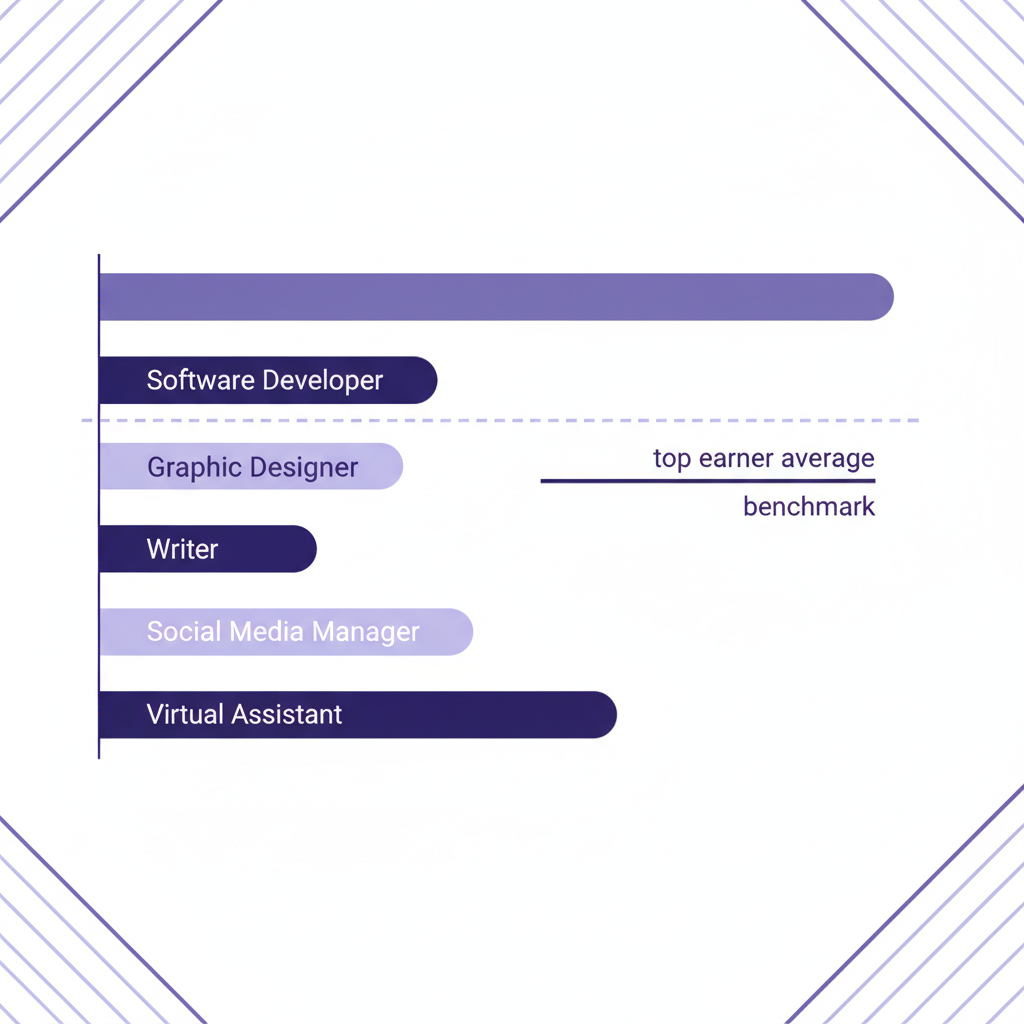
Knowing your profit per hour is step one. Knowing whether it's good for your trade is step two. This post compiles the ranges I see across freelance industries — from talking to hundreds of freelancers, reading public rate surveys, and aggregating what practitioners publish openly.
Disclaimer: these are directional, not definitive. Your mileage varies by city, niche, experience, and how honestly you count unbilled hours. But the shape of the numbers is right, and it helps answer the question "am I underpricing?"
What "profit per hour" means for these benchmarks
Revenue minus direct costs minus shared business expenses, divided by every hour worked on the business (billable and unbilled). Pre-personal-tax. Net of platform fees. This is the operational profit per hour — not take-home pay, not billed rate.
Software development + technical consulting
| Level | Billed rate | Typical profit/hr | Ratio |
|---|---|---|---|
| Junior freelance developer (yr 1–2) | $50–$85 | $28–$50 | 55–60% |
| Mid-level (yr 2–5) | $85–$140 | $55–$95 | 65–70% |
| Senior specialist (yr 5+) | $140–$250 | $100–$185 | 70–75% |
| Senior with retainer mix | $175–$300 | $135–$225 | 75–80% |
| Tech lead / solo consulting firm | $250–$450 | $180–$340 | 75–80% |
Tech has the widest profit-per-hour range of any freelance field. The upper band is achievable mostly through repeat clients + specialization + retainer structures. The floor is usually prospecting overhead.
Design (visual, UX, brand)
| Level | Billed rate | Typical profit/hr | Ratio |
|---|---|---|---|
| Junior freelance designer | $40–$70 | $22–$40 | 55–60% |
| Mid-level | $70–$115 | $45–$75 | 65–70% |
| Senior with specialty | $115–$200 | $80–$145 | 70–75% |
| Brand/strategy consultant | $175–$350 | $125–$260 | 72–78% |
Design has slightly higher unbilled-hour overhead than tech (more concept exploration, more revision rounds). Profit-per-hour ratios run a touch lower for the same career stage.
Writing + editorial
| Level | Billed rate / per-word equiv. | Typical profit/hr | Ratio |
|---|---|---|---|
| Content freelancer (yr 1–2) | $40–$75 / $0.10–$0.30/word | $20–$40 | 50–55% |
| Established content writer | $75–$150 / $0.40–$1.00/word | $45–$95 | 60–65% |
| Senior journalist/ghostwriter | $150–$400 / $1.00–$3.00/word | $110–$300 | 70–75% |
| Content strategy / editor-for-hire | $125–$275 | $90–$200 | 70–75% |
Marketing + growth consulting
| Level | Billed rate | Typical profit/hr | Ratio |
|---|---|---|---|
| Freelance marketer (yr 1–3) | $55–$100 | $30–$60 | 55–60% |
| Specialist (SEO, paid, email) | $100–$175 | $65–$125 | 65–70% |
| Senior growth consultant | $175–$350 | $125–$260 | 72–78% |
| Fractional CMO | $250–$500 | $175–$375 | 70–75% |
Content creation + creator economy
| Type | Typical profit/hr (full-time) | Key variable |
|---|---|---|
| Newsletter (paid subscriptions) | $25–$150 | Subscriber count × CPM equivalent |
| YouTube (mid-tier channel, 10–100k subs) | $15–$80 | Niche, sponsor CPM, video count |
| Podcast (mid-tier) | $20–$90 | Ad inventory + production overhead |
| Course creator (established) | $80–$400 | Launch leverage — very bursty |
| Paid community | $40–$150 | Retention + renewal dynamics |
Creator-economy profit per hour is the noisiest category because most creators significantly undercount production + content + community hours. The numbers above assume honest counting, which is rare.
Trade + service work
| Trade | Billed rate | Typical profit/hr |
|---|---|---|
| General contractor (solo) | $65–$125 | $38–$75 |
| Electrician (licensed, solo) | $85–$150 | $55–$95 |
| Plumber (licensed, solo) | $90–$175 | $60–$115 |
| Handyman (general) | $50–$100 | $32–$65 |
| Landscaper (solo) | $45–$95 | $25–$55 |
| Cleaning service (solo) | $30–$65 | $20–$45 |
Trade work has meaningful direct costs (materials, vehicle, tools, insurance) that software/design work doesn't. The profit-per-hour ratio (typically 55–65% of billed) reflects material markup + true overhead.
E-commerce + product creators
| Business | Typical profit/hr (solo operator) | Caveats |
|---|---|---|
| Etsy (handmade, active) | $12–$35 | Margin crushed by platform fees + materials |
| Print-on-demand (Merch, Redbubble) | $8–$25 | Requires volume; per-unit margin thin |
| Shopify direct-to-consumer (established) | $40–$120 | Much higher ceiling with traffic + margin |
| Amazon FBA (solo) | $25–$85 | Scale-dependent; very high variance |
| Digital products (templates, printables) | $50–$200+ | Front-loaded work, long tail |
What the ranges actually tell you
If your profit per hour is 2× below your trade's typical range, something's broken — usually scoping, pricing, or unbilled-hours discipline. If it's 2× above, either you're a genuine standout or you're undercounting.
Three honest questions to ask when comparing your number to the ranges:
- Am I counting every hour? Prospecting, admin, learning, invoicing, rework? Most freelancers undercount by 20–40% early on.
- Am I pricing at my trade's market? New freelancers often undercharge because they compare to a W-2 salary without factoring unbilled hours.
- Is my client mix dragging the average? One problematic client with heavy rework + low rate can pull the aggregate down 15–30 points. Sometimes the answer is to fire that client.
How to close the gap if you're below trade median
In rough priority order:
- Reduce unbilled hours. Template proposals, automate invoicing, enforce scoped deliverables. Typical gain: 8–15 points.
- Shift project mix toward repeat clients. Repeat-client engagements have dramatically lower prospecting overhead. Typical gain: 10–20 points.
- Raise rates for new clients. The last lever (not the first) — rate raises without the above two either drive clients away or absorb into more unbilled work. Typical gain: 10–30 points if the positioning supports it.
Related reading: how to calculate your real hourly rate, the profit-per-project pillar, and when to fire a client based on profit data.